ARCTIC ELEVATION | HILLIARD, OHIO

Compression Therapy in Hilliard, Ohio

Tired Legs? Give Them the Recovery Break They Deserve.

After a workout, long run, or day on your feet, settle into rhythmic compression boots that gently squeeze and release your legs. Make time for muscle comfort, relaxation, and recovery at Arctic Elevation Hilliard.

ARCTIC ELEVATION | HILLIARD, OHIO

Give Your Legs a Break With Compression Therapy

Your legs work hard. Sometimes they deserve a little attention.

After a challenging workout, a long run, or hours spent on your feet, sitting down and relaxing can feel like the best part of the day.

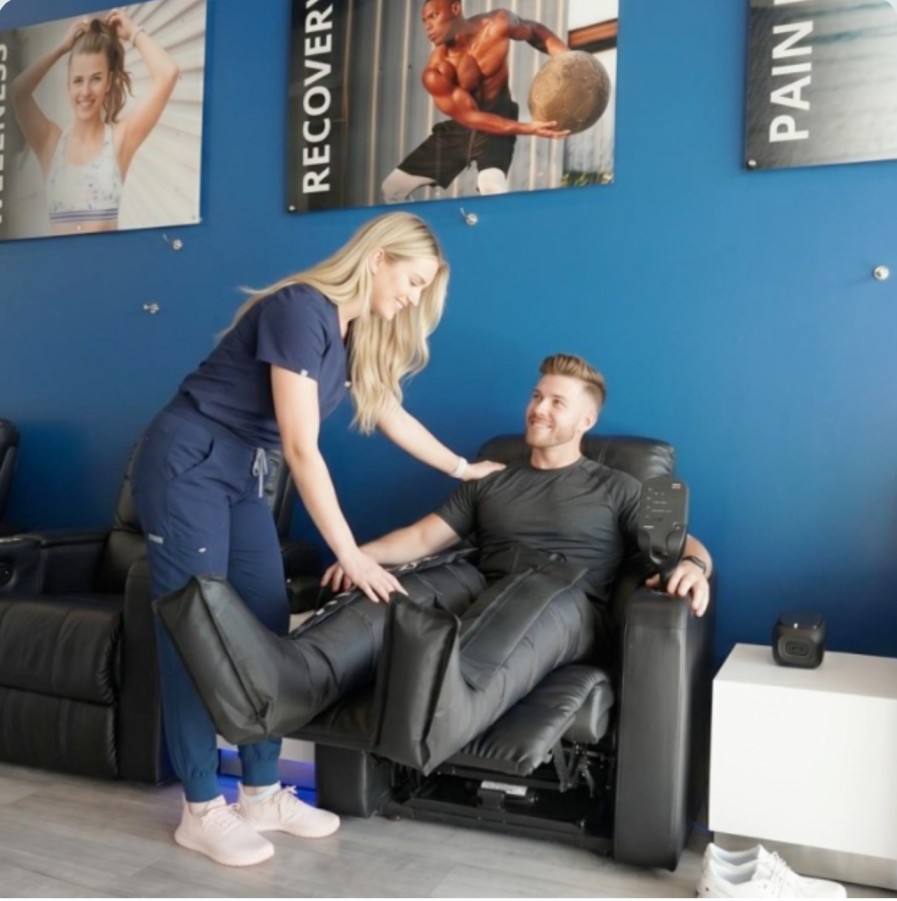
At Arctic Elevation Hilliard, Compression Therapy offers a comfortable, passive recovery experience using inflatable boots that wrap around your legs.

The boots gently inflate and release in a controlled sequence, creating waves of pressure that many people compare to a leg massage.

You don’t need to exercise, stretch, or operate the equipment yourself. Simply get comfortable and experience the rhythmic compression.

For athletes, fitness enthusiasts, and active adults, it’s an opportunity to make recovery-focused time part of a busy schedule.

Compression Therapy is one of several recovery and wellness services available at Arctic Elevation Hilliard.

Located on Truepointe Boulevard, our center is convenient for clients from Dublin, Upper Arlington, west Columbus, and surrounding Central Ohio communities.

Whether you’ve used recovery boots before or are curious about the experience, you can start with an initial consultation.

Client relaxing in pneumatic compression boots during a recovery session at Arctic Elevation Hilliard.
Infrared Sauna Therapy

What Is Pneumatic Compression Therapy?

Pneumatic compression therapy uses inflatable sleeves or boots to apply controlled pressure to the body.

At Arctic Elevation Hilliard, the service uses inflatable recovery boots that wrap around the legs.

These boots connect to a system that repeatedly inflates and deflates internal air chambers.

The result is a rhythmic squeezing and releasing sensation that can feel similar to a mechanical leg massage.

You may also hear this technology described as sequential compression therapy, air compression recovery, or leg compression therapy.

Compression boots educational section

How Do Compression Boots Work?

The boots contain inflatable chambers that apply pressure to different areas of your legs.

As the chambers fill and release, the pressure follows a programmed sequence.

Many systems move compression from the lower leg upward, although the exact pattern depends on the equipment.

The changing pressure produces a wave-like sensation while you remain in a comfortable resting position.

How Does Compression Affect Circulation?

Your veins carry blood from your legs back toward your heart.

During walking and other movement, contractions of your leg muscles help move that blood through the venous system.

Pneumatic compression applies external pressure that can temporarily assist venous blood movement during the compression cycle.

The changing pressure can also influence fluid movement in the legs.

This explains why the technology has been studied for circulation and why related devices are used in certain medical settings.

For wellness recovery boots, however, temporary changes in blood flow should not be confused with permanently improving circulation or treating a vascular condition.

Are Compression Boots Different From Compression Socks?

Yes.

Compression socks provide relatively steady pressure while you're wearing them.

Pneumatic compression boots actively inflate and deflate, creating changing patterns of pressure.

That makes the experience different from ordinary compression stockings or athletic compression clothing.

Potential Benefits

What Are the Potential Benefits of Compression Therapy?

People consider compression boots for different reasons.

Some want to focus on recovery after exercise. Others enjoy the massage-like pressure and the opportunity to relax after a physically demanding day.

Research has also examined how intermittent pneumatic compression affects circulation and certain exercise-recovery measurements.

Muscle Recovery

Muscle Recovery After Exercise

Give your legs some attention after a demanding workout.

Whether you lift weights, run, cycle, or participate in sports, recovery plays an important role in your training routine.

You may already stretch, hydrate, eat well, and allow time for rest.

Compression boots offer another way to make time for recovery without requiring additional physical effort.

Researchers have investigated whether intermittent pneumatic compression influences perceived soreness, muscular function, and recovery following exercise.

Some studies suggest modest benefits for certain soreness measurements, although faster muscle repair or improved performance has not been consistently demonstrated.

For active adults, compression therapy may be an experience worth considering alongside established recovery habits.

Tired Legs

Tired or Heavy Legs

Take a break after a day that keeps you moving.

You don’t have to be an athlete to appreciate some time off your feet.

Maybe you’ve spent hours walking, working, or completing everyday activities.

When your legs feel tired, settling into recovery boots provides an opportunity to relax while the equipment applies rhythmic pressure.

The repeated squeezing and releasing can be an appealing sensation for people who enjoy massage-like experiences.

It’s a way to give your legs some attention without using a foam roller or massage tool yourself.

Muscle Comfort

Temporary Muscle Comfort

Experience a different approach to post-activity comfort.

After demanding exercise or a physically active day, your legs may feel tight, fatigued, or uncomfortable.

The changing pressure of compression boots creates a distinctive sensation across the legs.

Some people find this comfortable and enjoy including it in their recovery routine.

Research into exercise-related soreness suggests possible modest benefits, but responses vary.

If you’re experiencing persistent pain, an injury, or unexplained swelling, seek appropriate medical evaluation rather than relying on wellness compression boots.

Circulation

Circulation During Compression

Understand what happens while the boots are working.

One of the better-understood physiological effects of pneumatic compression involves venous blood flow.

As the air chambers inflate, they apply pressure that can temporarily increase blood movement through the veins.

When the chambers deflate, that pressure is released.

Human studies have demonstrated changes in venous flow during pneumatic compression.

This is an established mechanical effect, although it doesn’t mean that routine recovery-boot sessions correct underlying circulation problems.

Relaxation

Relaxation and Recovery Time

Sometimes recovery starts with sitting down.

Not every recovery experience needs to involve movement, stretching, or another demanding activity.

Compression Therapy lets you settle into a comfortable position while the equipment performs its inflation and deflation cycles.

For people with busy schedules, this can be a welcome opportunity to slow down.

Whether you’ve finished a long run, a cycling session, or a demanding workday, the experience gives you dedicated time to rest your legs.

Research

What Does Scientific Research Say About Compression Therapy?

Intermittent pneumatic compression has been studied in both medical care and sports recovery.

The findings depend on how the equipment is used and which outcomes researchers measure.

Medical compression devices have established uses under specific clinical protocols. Wellness recovery boots are intended for a different experience.

Research involving athletes has focused primarily on perceived muscle soreness, muscular function, and performance following exercise.

01

Research on Exercise Recovery and Muscle Soreness

A 2024 systematic review and meta-analysis published in Biology of Sport examined lower-limb intermittent pneumatic compression as a recovery method.

The review included 17 studies involving 319 participants.

Researchers found generally small effects on muscular function and variable effects on measures of pain and soreness.

The findings suggest that pneumatic compression may modestly reduce perceived soreness in some circumstances, but evidence for consistently faster physical recovery remains limited.

Scientific Research: Effects of Lower-Limb Intermittent Pneumatic Compression on Sports Recovery (2024)

02

What Have More Recent Studies Found?

A 2025 randomized, placebo-controlled trial studied pneumatic compression after exercise designed to produce muscle soreness.

The study included 33 physically active male university students.

Researchers found no statistically significant improvement over placebo in the measured recovery of jumping and maximal muscle-contraction performance.

There was a trend toward lower perceived soreness in the compression group, suggesting an area for further research.

Scientific Research: Intermittent Pneumatic Compression May Reduce Muscle Soreness but Does Not Improve Neuromuscular Function (2025)

03

What Do These Findings Mean for You?

Compression boots have been studied as an exercise-recovery method, with some evidence suggesting modest improvements in perceived soreness.

However, research doesn't establish that every session accelerates muscle repair, prevents injury, or improves athletic performance.

For many clients, the immediate appeal is the rhythmic compression experience itself and the opportunity to spend time resting their legs.

04

Interested in Trying Compression Boots?

Maybe you've seen runners or athletes using recovery boots and wondered what the experience feels like.

Or perhaps you're looking for a relaxing way to spend time recovering after demanding activity.

An initial consultation at Arctic Elevation Hilliard gives you an opportunity to learn about the service, ask questions, and understand what to expect.

Enjoy Compression Therapy?

Who Might Enjoy Compression Therapy?

Compression Therapy appeals to people with different activity levels and recovery interests.

You don’t need to be a competitive athlete to appreciate the experience.

Runners and Endurance Athletes

Running places repeated demands on the muscles of the lower body.

If you're training for a race, logging regular miles, or participating in running groups, you probably already pay attention to recovery.

Compression boots provide a passive experience that may interest you after demanding activity.

Cyclists and Fitness Enthusiasts

Cycling, lower-body strength training, and other workouts can leave your legs feeling tired.

Pneumatic compression offers an opportunity to rest while the boots apply rhythmic pressure.

It's an experience some active people choose to include alongside their usual recovery habits.

Active Adults With Demanding Days

You may spend hours standing, walking, or performing physically demanding work without participating in organized sports.

After a long day, compression boots can provide a welcome opportunity to sit back and relax.

People Curious About Recovery Boots

Perhaps you've seen compression boots at a fitness center or used compression clothing before.

If you're interested in trying sequential pneumatic compression, an initial consultation can help you understand how the experience works and whether it's appropriate for you.

Compression Therapy

What to Expect During Compression Therapy at Arctic Elevation Hilliard

If you’ve never worn pneumatic recovery boots, you may wonder how the experience works.

The process is straightforward: get comfortable, have the inflatable boots fitted around your legs, and experience a repeating sequence of compression and release.

01

Before Your Session

Your visit begins with preparation and any applicable safety screening.

The Hilliard team can explain the equipment, how the boots fit, and what to expect during the session.

You'll need to disclose relevant concerns such as a history of blood clots, significant vascular conditions, recent injuries, or unexplained leg symptoms.

The equipment must be used according to its operating instructions.

02

Getting Comfortable

You'll settle into an appropriate resting position while the inflatable boots are fitted around your legs.

The boots contain air chambers that expand and release throughout the session.

Once you're prepared, the compression sequence begins.

The exact fit, positioning, and settings depend on the installed equipment.

03

What Does Compression Therapy Feel Like?

Imagine a gentle wave of pressure traveling along your legs.

You'll feel the boots inflate, squeeze, and release in a repeating pattern.

Many people compare the sensation to a mechanical leg massage, although it feels different from hands-on massage.

The pressure should be tolerable, not painful.

If you experience discomfort, tingling, unusual numbness, or another concerning sensation, notify the team so the session can be stopped and assessed.

04

During Your Session

Compression Therapy is a passive experience.

You don't need to perform exercises or actively move your legs while the boots operate.

The equipment follows its programmed inflation and deflation sequence as you remain comfortably positioned.

The specific pressure and sequence depend on the installed system.

05

After Your Session

When the compression cycle ends, the boots deflate and are removed.

Some people describe their legs as feeling more relaxed or comfortable afterward.

Others primarily enjoy the time spent resting.

You can generally return to your usual activities unless you receive different instructions.

Individual experiences vary.

06

How Long Does a Session Take?

Session length depends on the equipment and operating procedures at Arctic Elevation Hilliard.

Your visit may also include preparation, screening, and time to get comfortable.

The team can confirm current appointment arrangements.

07

How Often Should You Use Compression Boots?

There isn't one recovery-boot schedule established as best for everyone.

Research has used different pressures, durations, and frequencies.

If you're considering regular visits, discuss the available options and the appropriate use of the equipment.

More frequent sessions don't necessarily produce better results.

Pneumatic Compression Therapy

Is Pneumatic Compression Therapy Safe?

Compression boots are noninvasive, but they’re not appropriate for everyone.

Because the equipment applies pressure to the legs, certain medical and circulatory conditions require particular attention.

Compression Therapy

When Compression Therapy Should Be Avoided

Do not use wellness compression boots if you have a known or suspected active blood clot in your leg.

A deep vein thrombosis, or DVT, requires medical evaluation and appropriate care.

New or unexplained swelling in one leg, particularly when accompanied by pain, warmth, or redness, may indicate a condition requiring prompt assessment.

Chest pain or sudden shortness of breath can signal a medical emergency and require immediate medical attention.

Recovery boots are not a way to evaluate or manage these symptoms.

Health Considerations

Other Important Health Considerations

Additional screening is important if you have:

Pregnancy, recent surgery, and other relevant medical circumstances should also be disclosed.

Some conditions are contraindications rather than situations where simply reducing pressure is sufficient.

The installed equipment’s instructions and appropriate clinical guidance must be followed.

Side Effects

What Are the Possible Side Effects?

Potential concerns include temporary pressure discomfort, skin irritation, excessive pressure from improper fit, or unusual numbness and tingling.

A compression session should not be painful.

Appropriate screening, proper fit, and adherence to equipment instructions help reduce avoidable risks.

Medical Compression Therapy?

Is This the Same as Medical Compression Therapy?

The technology is related, but the intended use is different.

In healthcare settings, intermittent pneumatic compression may be prescribed under specific protocols for medical purposes, including blood clot prevention in selected patients and management of certain fluid-related conditions.

At Arctic Elevation Hilliard, compression boots are offered as a wellness and recovery experience.

They are not a substitute for prescribed medical compression, diagnosis, or care for vascular or lymphatic disease.

Why Choose

Why Choose Arctic Elevation Hilliard for Compression Therapy?

A relaxing recovery-boot experience within a local wellness center offering several ways to focus on recovery.

If you’re looking for compression therapy near Columbus, you may be comparing recovery facilities, gyms, and wellness centers.

At Arctic Elevation Hilliard, pneumatic leg compression is part of a broader environment focused on recovery and wellness.

That gives you an opportunity to consider different experiences based on your interests.

01

A Comfortable, Passive Recovery Experience

Some recovery activities require stretching, movement, or physical effort.

Compression Therapy offers something different.

You settle into the recovery boots while the equipment applies rhythmic pressure to your legs.

If you enjoy massage-like sensations or want a break after physical activity, the experience may be worth considering.

02

Different Recovery Services Under One Roof

Arctic Elevation Hilliard offers several distinct recovery experiences.

Interested in controlled cold exposure? Explore Whole-Body Cryotherapy.

Hilliard's cryotherapy service uses a fully enclosed, electrically cooled, nitrogen-free chamber for brief exposure to extremely cold, dry air.

Prefer warmth? Infrared Sauna provides a separate heat-based relaxation experience.

Compression boots, cryotherapy, and infrared sauna work differently. Each can be considered according to your interests and safety considerations.

Combining services doesn't guarantee additional medical or recovery benefits.

03

Convenient for Hilliard and Central Ohio

Arctic Elevation Hilliard is located at 3985 Truepointe Boulevard.

Our location is convenient for clients from Dublin, Upper Arlington, west Columbus, and nearby Central Ohio communities.

Whether you're interested in leg compression after exercise or trying recovery boots for the first time, your initial consultation is an opportunity to ask questions before scheduling.

04

Interested in Regular Recovery Visits?

If you enjoy Compression Therapy and want to learn about regular visits, explore Arctic Memberships.

Our team can confirm current plans and which services are included.

Membership participation doesn't replace appropriate screening or equipment safety requirements.

FREQUENTLY ASKED QUESTIONS

Compression Therapy FAQs

Pneumatic compression therapy uses inflatable sleeves or boots to apply controlled pressure to the legs.

At Arctic Elevation Hilliard, recovery boots inflate and deflate in repeating sequences, creating a rhythmic, massage-like compression experience.

Compression boots use air chambers that inflate and deflate in a programmed pattern.

The changing pressure can temporarily increase venous blood movement and influence fluid movement in the legs.

The exact sequence depends on the equipment.

People commonly consider compression boots for post-workout recovery, temporary leg comfort, tired or heavy legs, and relaxation.

Research suggests possible modest effects on perceived soreness, but faster recovery and improved athletic performance aren't guaranteed.

Some people find rhythmic compression comfortable after demanding activity.

Studies suggest possible small improvements in perceived exercise-related soreness.

Persistent or unexplained leg pain should receive appropriate medical evaluation.

Pneumatic compression can temporarily increase venous blood movement during its inflation cycles.

This doesn't establish that wellness recovery boots permanently improve circulation or treat underlying vascular disease.

Compression boots are used in exercise-recovery settings.

Research suggests possible modest soreness benefits, but improvements in physical performance or recovery speed have not been consistently demonstrated.

You'll feel a repeating pattern of squeezing and releasing along your legs.

Many people compare the sensation to a mechanical leg massage.

The pressure should be tolerable, not painful.

Session length depends on the equipment and procedures used at Arctic Elevation Hilliard.

Your appointment may also include preparation and safety screening.

Current session arrangements are provided before your visit.

No.

Compression boots may be inappropriate for people with suspected blood clots, significant vascular disease, unstable heart conditions, certain infections, or other relevant medical concerns.

Appropriate screening and equipment instructions must be followed.

Arctic Elevation Hilliard offers pneumatic compression boots at 3985 Truepointe Boulevard in Hilliard, Ohio.

Our location is convenient for clients from Dublin, Upper Arlington, west Columbus, and surrounding Central Ohio communities.

Request your initial consultation to learn more about the experience.

INITIAL CONSULTATION

Ready to Give Your Legs Some Recovery Time?

Maybe you’ve seen athletes using recovery boots and wondered what the experience feels like.

Perhaps your legs are tired after workouts or long days, and you’re interested in a relaxing wellness session.

Start with an initial consultation at Arctic Elevation Hilliard.

Tell us what interests you about Compression Therapy and what you’d like to know before your first visit.

Our team can explain the recovery-boot experience, preparation requirements, current appointment options, and relevant safety considerations.